TWISS #46: Aging Better
How loneliness hurts the elderly, and how their wisdom improves lives.


Welcome to This Week in Social Science, where we turn toward the question of aging. In A Man on the Inside, the Netflix adaptation of the 2020 film The Mole Agent by Maite Alberdi Soto, the viewer is guided through a warm-hearted comedy addressing aging in modern society, with an especially sharp look at the impacts of social exclusion and loneliness. This week, we take a look at cross-cultural research highlighting the devastating impact of loneliness on the elderly, and how creating conduits for elderly people to share their wisdom can improve attitudes toward the elderly and the lives of those who learn from them.
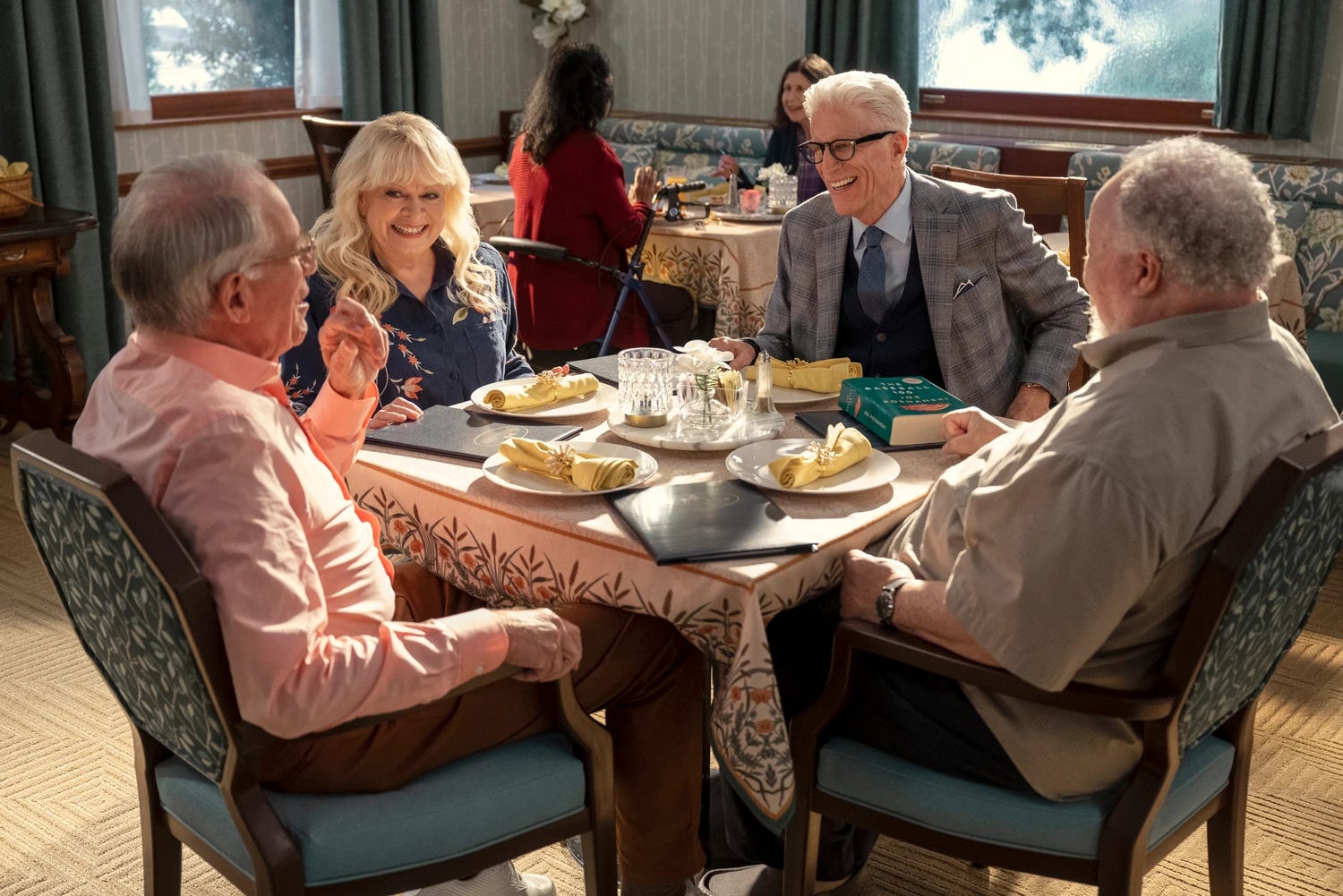
Colleen E. Hayes/Netflix
Isolation and Cognitive Decline
Social isolation hurts, regardless of age. But for the elderly, social isolation may also come with severe consequences to cognitive health and wellbeing. In many societies with rapidly aging populations, social isolation of the elderly and the cognitive decline that comes along with it poses threats to the wellbeing of the elderly and to social welfare systems of the state.
In a recent study conducted across 24 countries with 101,581 people, researchers found evidence supporting the concern that social isolation can lead to cognitive decline, with a consistent negative relationship emerging between social isolation and cognitive decline. However, researchers also found evidence that we can combat social isolation at the micro-level (family, neighborhood), meso-level (community), and macro-level (institutions and cultural norms). Having strong familial support networks, community structures which encourage volunteering and interaction, and social welfare systems to support elderly integration in society can all protect cognitive abilities and improve the lives of the elderly and the health of society.1
Intergenerational Wisdom Sharing
In 1972, Donald Cowgill proposed that as modernization increases, the perceived value and respect for the elderly declines. He argued that less modernized societies valued knowledge that was transferred down across the generations more. The elders, who held much of that knowledge, were therefore more valued. By contrast, modernization values technical knowledge which rapidly changes and updates, so the knowledge of the elders, and the elders themselves, are valued less.
But that approach might be missing out on valuable wisdom and perspectives that we can learn from our elders. Researchers designed a randomized controlled study where middle- and high-schoolers worked collaboratively to develop interview questions and were paired with older adults for a one hour interview where the teenagers asked for advice and life lessons on bullying, discrimination, love, healthy relationships with family and partners, and politics.
Results from the experiment showed that, both compared to the control condition and to their pre-test attitudes, the teenagers who interviewed older adults and asked their advice and life lessons had more positive perceptions of the elderly and working with the elderly, and also felt that they had more of a sense of purpose in life. This study provides early experimental evidence for the value of engaging with and learning from our elders.2
Takeaway
Time and tide wait for no man, the medieval proverb says. The way that we treat our elders today may well be how we are treated in the years to come. We can help build familial, communal, and societal structures that are better designed to meet our needs as we age, but we can also remind ourselves and the people around us that even in a modernizing society, many of the dilemmas that we will face, whether about relationships, identity, love, or suffering, are as old as time itself, and we can benefit so much from the wisdom of our elders to guide us through our lives.
Zhang, W., Zhang, J., & Gao, N. (2025). Social isolation and cognitive decline in older adults: a longitudinal study across 24 countries. BMC Geriatrics, 25(1), 775.
Pillemer, K., Nolte, J., Schultz, L., Yau, H., Henderson Jr, C. R., Cope, M. T., & Baschiera, B. (2022). The benefits of intergenerational wisdom-sharing: A randomized controlled study. International Journal of Environmental Research and Public Health, 19(7), 4010.